
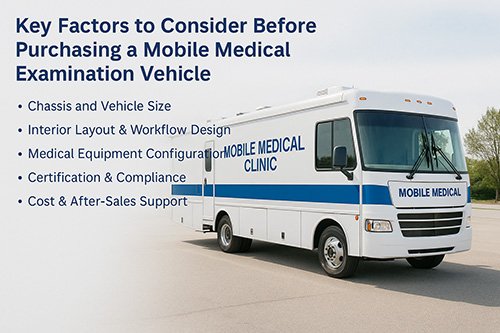
Introduction
Mobile medical examination vehicles (also known as health check vans or mobile clinics) have become essential tools in modern healthcare delivery. They allow medical teams to provide diagnostics, preventive care, and specialized services anywhere, from rural villages to corporate campuses. But before investing in a medical bus, buyers need to carefully evaluate key factors to ensure the vehicle meets their operational needs and long-term budget.
1. Chassis and Vehicle Size
- Chassis options: Common choices include Ford Transit, Iveco, Mercedes-Benz Sprinter, or custom bus platforms.
- Length & capacity: Standard sizes range from 6 meters (compact) to 12 meters (full-size). Larger vehicles allow for more equipment but increase cost and fuel consumption.
- Driving conditions: Consider road width, terrain, and local driving regulations when selecting the chassis.
2. Interior Layout & Workflow Design
- Patient flow: A well-designed interior separates waiting, examination, and testing areas.
- Privacy & safety: Soundproof partitions and medical-grade flooring are essential.
- Flexibility: Modular layouts allow future upgrades for new medical equipment.
3. Medical Equipment Configuration
- Basic screening tools: ECG, ultrasound, urine analyzer, biochemical analyzer, and blood cell analyzer.
- Imaging systems: Digital Radiography (DR) or X-ray machines for chest and bone exams.
- Special rooms: Audiometry cabins, dental units, or gynecology exam setups depending on application.
4. Power Supply & Connectivity
- Generators: Diesel generators for continuous operation; hybrid systems for quieter and eco-friendly use.
- Shore power: External power input for hospital or clinic docking.
- Telemedicine integration: Internet connectivity enables remote consultations and cloud-based data sharing.
5. Certification & Compliance
- International standards: ISO, CE, FDA, or GCC certification depending on the target market.
- Local regulations: Some countries require vehicle-level approval before operation.
- Radiation protection: For X-ray vehicles, proper shielding and lead protection are mandatory.
6. Cost & After-Sales Support
- Initial investment vs. lifetime value: A cheaper vehicle may lead to higher maintenance costs.
- After-sales service: Ensure the manufacturer provides spare parts, technical support, and training.
- Customization flexibility: A good supplier can adapt to specific project needs.
Conclusion
Investing in a mobile medical examination vehicle is not just about buying a bus with equipment—it’s about creating a reliable healthcare delivery solution. By carefully considering chassis, interior design, medical equipment, compliance, and after-sales service, buyers can ensure their investment brings long-term benefits to patients and organizations alike.