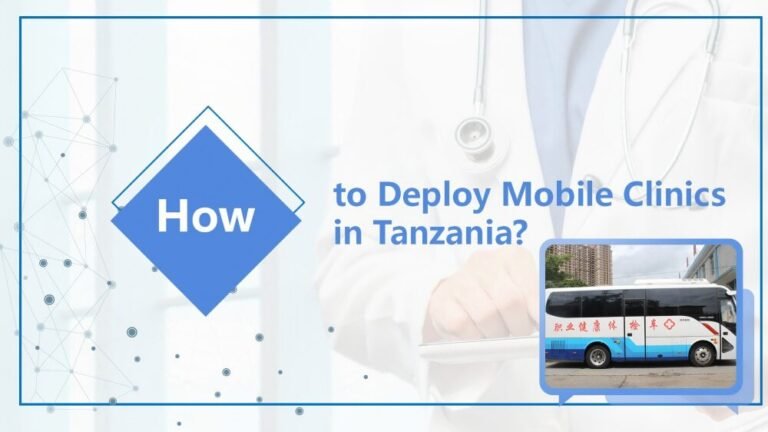
When deploying mobile clinics in Africa (e.g., Tanzania), it is essential to consider factors such as geography, road conditions, healthcare needs, climate, and resource limitations. Below are detailed recommendations for vehicle configuration and performance:
1. Vehicle Selection & Performance Recommendations
Vehicle Types
- 4×4 Off-Road Vehicles/Trucks:
Many areas in Tanzania have poor road conditions (muddy, gravel, seasonal flooding). High-ground-clearance, 4WD vehicles (e.g., modified Toyota Land Cruiser, Mercedes Unimog, or light trucks) are recommended. - Vans (for urban/flat areas):
If operating primarily in towns or well-paved areas, modified high-roof vans (e.g., Ford Transit) are more cost-effective and easier to maintain.
Key Performance Requirements
- Weather Resistance:
Vehicles must withstand high temperatures, dust, and humidity. Reinforced cooling systems, dust-proof sealing, and anti-corrosion coatings are advisable. - Suspension & Tires:
Heavy-duty suspension (e.g., leaf springs or air suspension) and puncture-resistant all-terrain tires for rough roads. - Power & Fuel:
- Prefer diesel engines (better torque, fuel efficiency, and wider availability in Africa).
- Install auxiliary fuel tanks for longer range (fuel stations are scarce in remote Tanzania).
2. Medical Equipment Configuration
Basic Medical Modules
- Diagnostic Tools: Portable ultrasound, ECG machine, glucometer, malaria rapid test kits, HIV testing tools.
- Treatment Equipment: Small autoclave, emergency kits, IV sets, basic dental tools.
- Medicine Storage: Lockable, moisture-resistant cabinets and solar-powered refrigerators (for vaccines, antibiotics).
Space Optimization
- Modular Design: Detachable medical cabinets and workstations for flexible use (e.g., prenatal care, vaccinations).
- Infection Control: Isolation curtains, ventilation (HEPA filters), and sealed waste containers.
3. Power & Energy Supply
- Solar System:
Roof-mounted solar panels (300W+) with lithium batteries to power lighting, charging, and refrigeration. - Backup Power: Diesel generator (for extended cloudy periods), but ensure safe fuel storage.
- Priority Power Usage: Prioritize vaccine refrigeration, communication devices, and essential lighting.
4. Communication & Navigation
- Satellite Communication:
Satellite phones or GPS devices (e.g., Garmin InReach) for areas with no cell coverage (e.g., remote Serengeti). - Offline Maps: Pre-install Tanzania offline maps (e.g., OpenStreetMap, Maps.me) to avoid reliance on internet.
5. Logistics & Maintenance
- Local Maintenance:
Use commonly available vehicle brands (e.g., Toyota, Transit) for easier spare parts and repairs. - Spare Parts:
Carry critical spares (tires, belts, filters) and a basic toolkit. - Driver Training:
Train drivers in basic mechanical skills (e.g., tire changes, troubleshooting).
6. Compliance & Safety
- Local Regulations:
Register vehicles for medical use to avoid customs issues (Tanzania exempts medical equipment from import duties). - Security Measures:
- Anti-theft designs: Window grilles, GPS trackers.
- Park overnight near police stations or community centers.
7. Additional Adaptations
- Water & Sanitation:
Install small water tanks and handwashing stations with sanitizer. - Cultural Adaptation:
Use prominent medical markings (e.g., Red Crescent) and Swahili labels (e.g., “Huduma za Afya” – Healthcare Services).
Tanzania Case Studies
- African Mission Healthcare: Uses modified Land Cruisers with solar vaccine fridges for nomadic tribes.
- PATH Organization: Deploys modular vans for malaria and maternal health screening.
With these configurations, mobile clinics can provide efficient, sustainable healthcare in Tanzania. Regularly assess vehicle conditions and medical needs to adjust equipment accordingly.