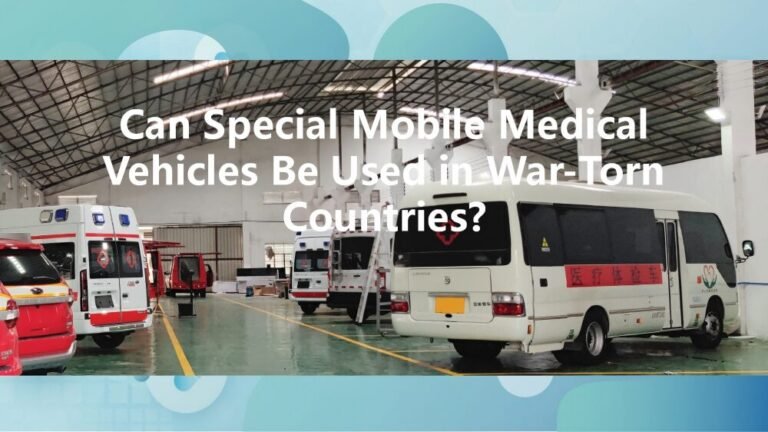
Special mobile medical vehicles can indeed be deployed in war-torn countries or conflict zones, but their operation comes with unique challenges and risks. Here’s a detailed analysis:
1. Applicable Scenarios & Advantages
- Mobility & Rapid Response: Specialized mobile medical units (e.g., field hospital trucks, armored ambulances) are highly mobile, allowing for quick relocation in poor road conditions or sudden security threats. They are ideal for frontline emergency care or refugee camp support.
- Modular Functionality: Some vehicles are equipped with surgical suites, ICUs, and diagnostic tools (X-ray, ultrasound), enabling emergency surgeries, trauma treatment, and infectious disease screening.
- Protection Capabilities: Armored medical vehicles can withstand small arms fire and shrapnel, reducing risks for medical staff and patients.
2. Key Challenges & Risks
- Security Threats:
- May become targets for armed groups (though illegal under international law, attacks do occur).
- Require negotiated ceasefires or safe passage agreements, often relying on local factions or international organizations (UN, Red Cross).
- Logistics & Maintenance:
- Fuel, medical supplies, and power may be disrupted, necessitating redundant supply chains.
- Limited repair infrastructure in war zones can immobilize vehicles if damaged.
- Legal & Ethical Issues:
- Must display clear medical insignia (e.g., Red Cross) to avoid being mistaken for military targets.
- May face triage dilemmas when resources are scarce.
3. Real-World Examples
- Doctors Without Borders (MSF): Operates modified medical vehicles in Syria, Yemen, and other conflict zones, often negotiating access with warring parties.
- UN Peacekeeping Forces: Deploys armored ambulances in African conflict areas, sometimes with armed escorts for medical evacuations.
- Ukraine War: Both sides use mobile medical units for casualty evacuation, though some have been damaged in shelling.
4. Conditions for Successful Deployment
- Security Protocols: Secure neutrality agreements with combatants or arrange armed escorts from international forces.
- Local Collaboration: Train local medical personnel to reduce dependence on external support.
- Adaptive Strategies: Use decentralized deployment, night operations, and other tactics to minimize risks.
Conclusion
Special mobile medical vehicles can save lives in war zones, but their use requires meticulous planning regarding security, logistics, and legal frameworks. Typically, experienced organizations (ICRC, MSF) or military forces lead such efforts, while civilian agencies must proceed with extreme caution.